Research Overview
My research develops real-time, probabilistic, and optimization-based algorithms for autonomous systems operating in uncertain and dynamic environments.
The work spans three core areas that integrate robotics, sensing, and applied stochastic modeling.
1. Multi-Robot Coordination & Real-Time Decision-Making
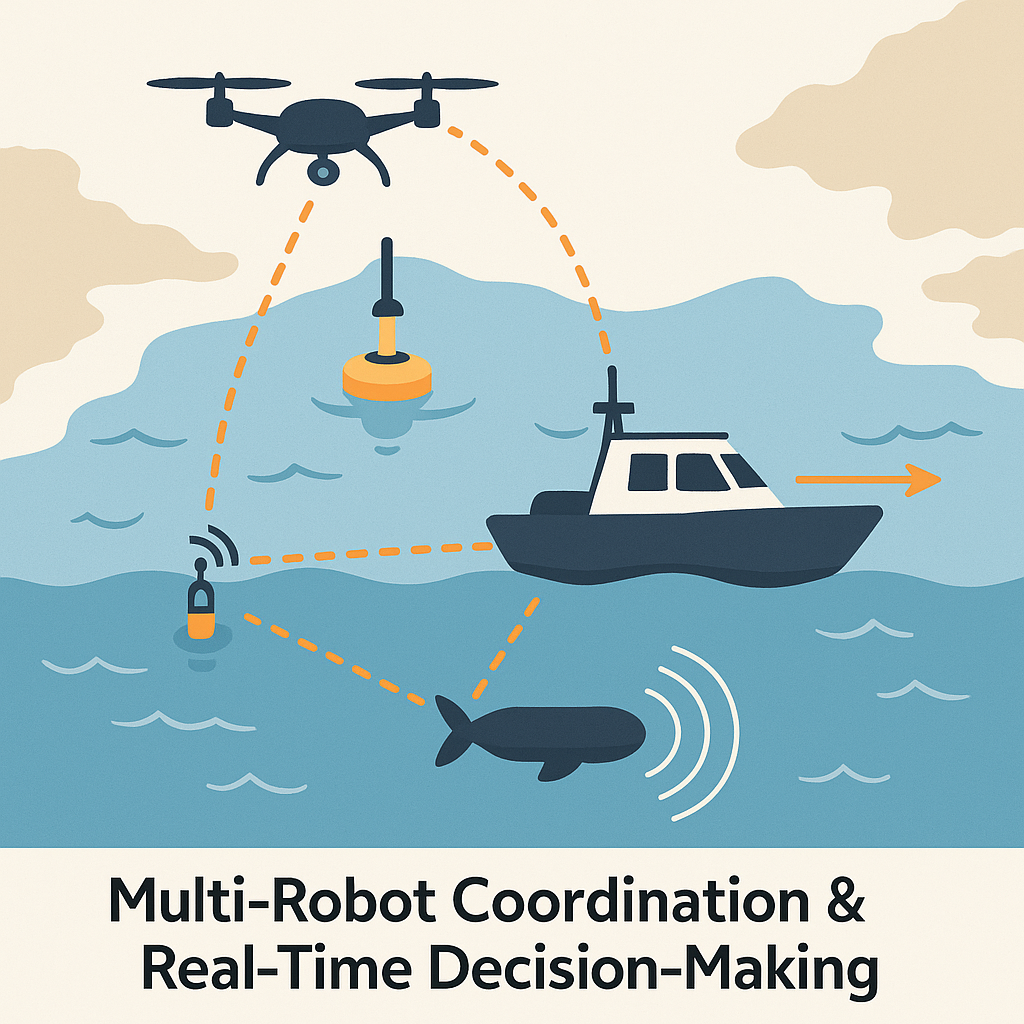
I design algorithms that enable heterogeneous teams of robots—drones, surface vessels, underwater vehicles, and fixed sensors—to collaborate efficiently in dynamic, data-limited settings.
This work includes:
- Cooperative mission planning
- Distributed control and communication
- Task allocation for mixed robot teams
- Real-time adaptation under uncertainty
These methods support large-area ocean monitoring, maritime surveillance, and rapid decision-making for disaster and environmental response.
2. Probabilistic Modeling for Sensing & Outlier Detection
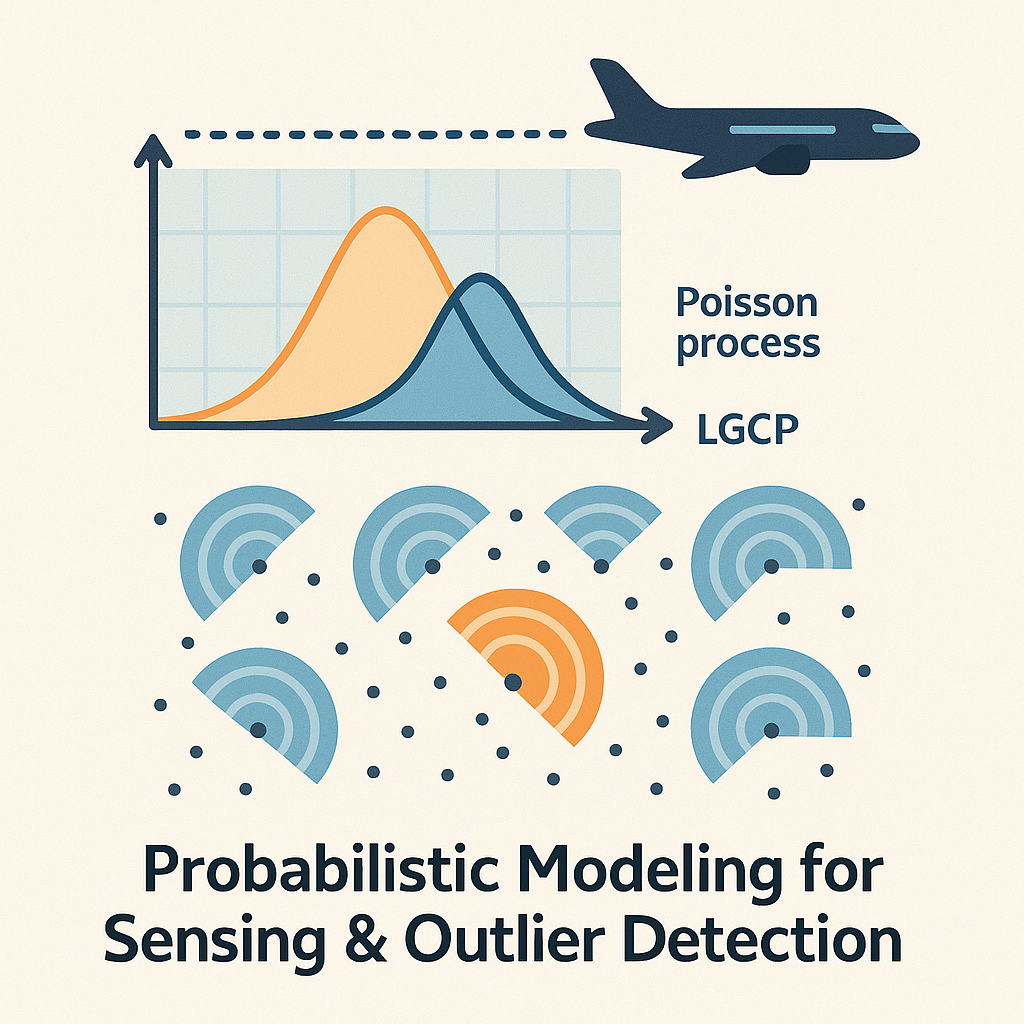
I develop stochastic modeling frameworks to characterize uncertain target arrivals and environmental processes using Poisson processes and log-Gaussian Cox processes (LGCP).
These models enable autonomous systems to:
- Detect atypical or anomalous activity
- Quantify uncertainty in arrival patterns
- Fuse heterogeneous environmental and sensor data
- Improve robustness against rare, transient, or unexpected events
Examples include identifying abnormal vessel traffic, unusual marine animal movement, and environmental anomalies in coastal regions.
3. Optimal Sensor Networks & Adaptive Placement
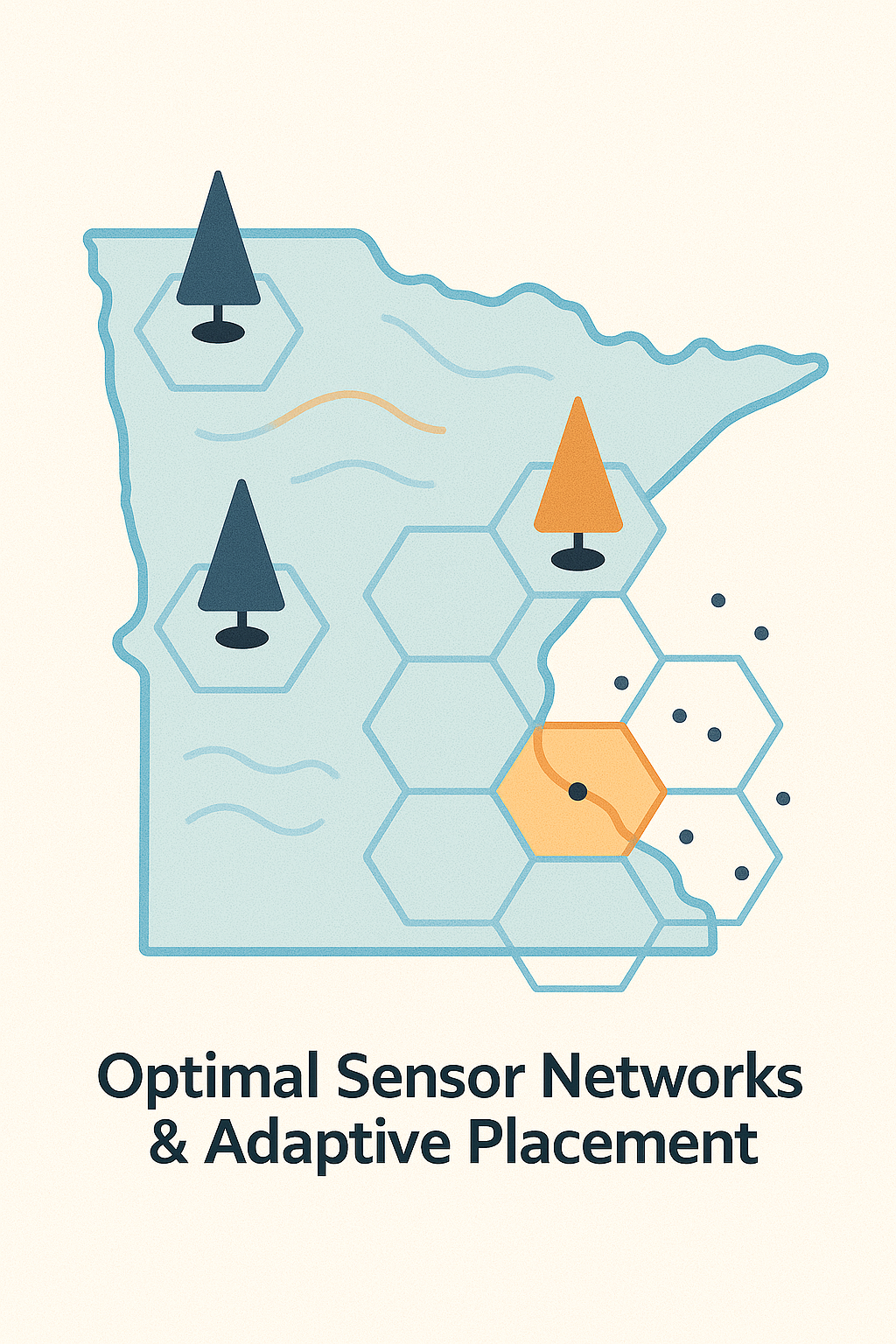
I design optimization methods for deploying fixed and mobile sensor networks that maximize detection performance in uncertain environments.
My work incorporates:
- Void-probability and variance-aware approximations
- Real-time, near-optimal repositioning algorithms
- Distributed sensing strategies for multi-robot teams
- Adaptive coverage of spatially variable or dynamic regions
These approaches enhance the capability of autonomous sensing systems to detect rare events and support persistent monitoring in complex marine environments.
If you would like to learn more about current projects and results, please visit the Publications or Talks sections of this site.